The Timing Problem of Thought and the Illusion of Control
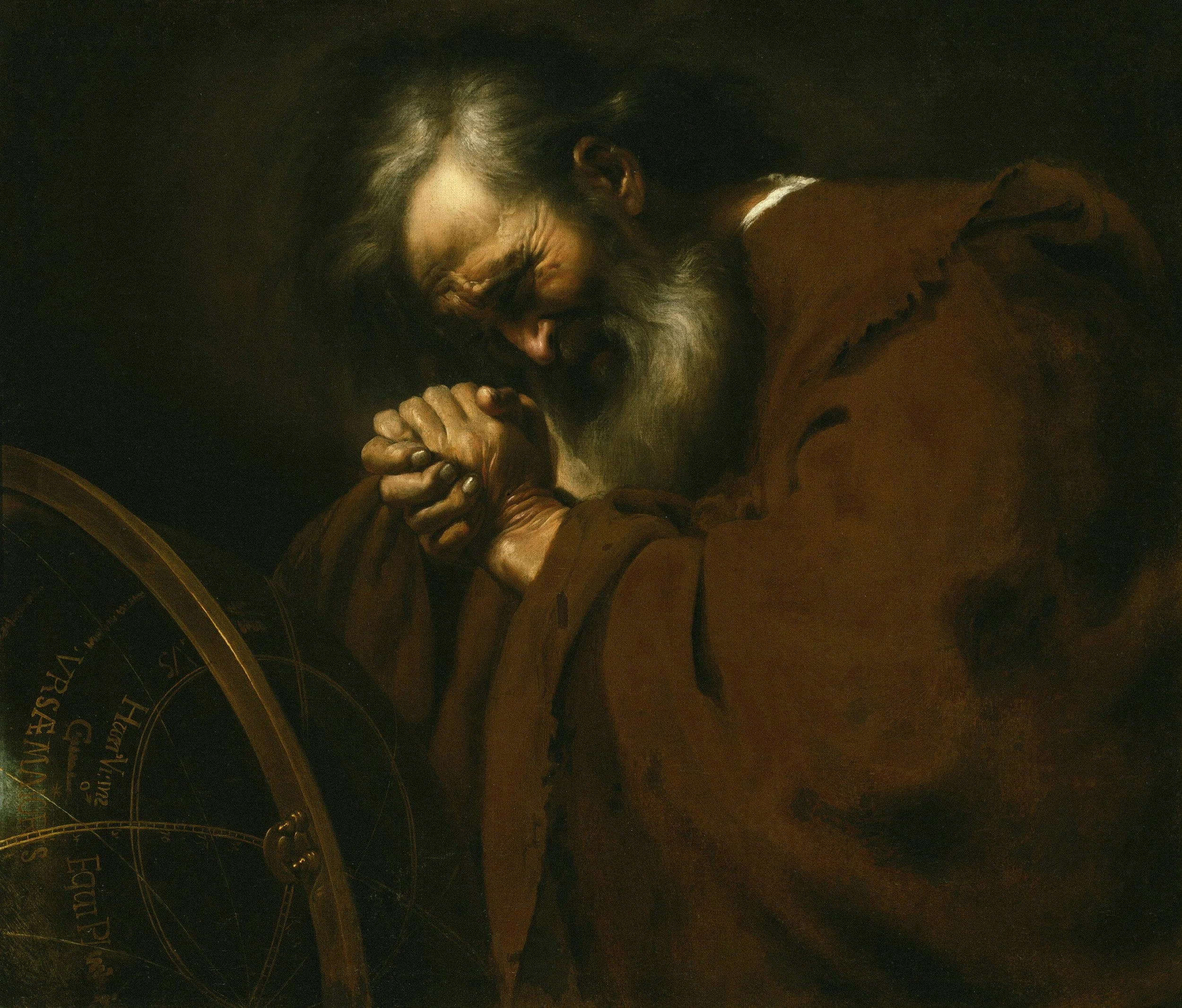
I’ve noticed that lately it has become very fashionable to begin sentences with “as a scientist…”, “as a woman…”, “as a specialist in my field…”, or my personal favorite, “as a social media influencer with absolutely zero qualifications to give people advice.”
I beg your pardon, I had to. It’s 9am on a Wednesday, I am only one cup of coffee in, and the idea for this piece occurred to me while I was sitting in New York traffic, experiencing a level of irritation that felt disproportionate but nonetheless real. I will try, with varying degrees of success, to restrain my more sarcastic tendencies as this progresses, although I am not particularly confident in my ability to do so. The reason I bring this up is because I have a confession to make.
As a control freak, not yet in recovery and with no immediate plans to enroll in any form of behavioral rehabilitation, I have always found it conceptually and, more importantly, viscerally difficult to accept the possibility that I may not actually possess control over anything in the way I intuitively understand that term. This tension became significantly more difficult to ignore after I finished Determined: A Science of Life Without Free Will by Robert Sapolsky¹. I had already entertained the idea that free will might be more of a phenomenological artifact than a mechanistic reality, if not entirely absent then at least increasingly difficult to defend, but there is a difference between considering something and being cornered by it. The accumulation of empirical, evolutionary, and neurobiological evidence does not just present an argument. It constrains the alternatives. It lands with the same structural finality as Anthony Joshua connecting cleanly with Jake Paul, except instead of a jaw, it is your conceptual structure that absorbs the impact.
Predictably, and entirely in line with my inability to accept conclusions without attempting to dismantle them first, I decided to challenge both the argument presented in the book and the set of intuitions I had been operating under for years. As soon as I finished reading, I sat down with what I believed to be a relatively straightforward objective.
I wanted to choose my next thought.
The Experiment
I deliberately avoided overengineering the conditions at the outset, opting instead for a controlled but minimal setup in which I reduced external sensory input, maintained a relatively static environment, and directed my attention toward a single, clearly defined intention. The task was not to bias or guide the trajectory of cognition, but to engage in what I imagined as discrete, top-down selection, similar to choosing a specific item from a list.
Implicit in this was the assumption that there would be a perceivable interval between the formation of intention and the emergence of the selected thought. I expected to encounter something like a decision threshold, a brief window in which conscious intervention could exert influence over the outcome.
What I encountered instead was the complete absence of such a window.
Cognitive content did not present itself as discrete units waiting to be selected, but as a continuous stream. Each thought appeared already structured, linguistically formed, and affectively tagged. They arrived assembled and in motion, with no identifiable boundary at which they could have been consciously initiated. The experience felt less like generating thoughts and more like observing them late, as though I were stepping into a process already underway and then taking credit for whatever I happened to notice.
Attempts to intervene only reinforced the same pattern. Efforts to slow the process, to isolate a moment before a thought emerged, or to exert tighter attentional control all resulted in the same outcome. The intention to control appeared in exactly the same way as the thoughts it was meant to regulate. At no point did I encounter anything resembling a discrete initiating agent. What initially felt like failure began to look more like a flaw in the premise itself.
The Science
From a neurophysiological perspective, this is consistent with what is known about large-scale brain dynamics.Cognition is not the product of a single centralized controller, but emerges from distributed networks operating in parallel.
Spontaneous thought is strongly associated with activity in the default mode network, including medial prefrontal cortex, posterior cingulate cortex, precuneus, and lateral parietal regions. These areas remain active even in the absence of external demands and are involved in autobiographical memory, future simulation, and self-referential processing.²,³
At the same time, the brain is continuously generating and updating predictions about both the external world and internal bodily states. Within predictive processing accounts of brain function, what we experience as a thought reflects the stabilization of an internal model that has already been shaped by prior neural activity.⁴,⁵ Conscious awareness does not appear to initiate these processes. It primarily reflects their outcome.
Experimental evidence supports this temporal lag. Studies by Benjamin Libet identified the Bereitschaftspotential, a gradual buildup of neural activity in motor planning regions that precedes the reported awareness of intention by several hundred milliseconds.⁶ More recent work using neuroimaging and pattern classification suggests that aspects of brain activity can predict certain decisions several seconds before individuals report making them, although the interpretation of these findings remains debated.⁷
By the time a thought becomes available to awareness, the underlying neural activity has typically already passed through multiple stages of processing, integration, and selection across distributed circuits, including cortico–basal ganglia–thalamo–cortical loops.
Free Will
The discomfort comes from not being able to locate any structure in the brain where the kind of control we assume actually occurs. The idea of a single central executive, often associated with the prefrontal cortex, becomes difficult to sustain under closer inspection. Prefrontal activity depends on input from subcortical systems, including dopaminergic signaling and limbic contributions related to salience and emotion. What we interpret as deliberate decision making can be understood as the result of prior neural states shaped by plasticity, development, genetics, and environment.⁸
This is where Robert Sapolsky’s argument becomes difficult to set aside. Behavior does not appear to originate at a single point. It appears to emerge from a continuous chain of causation that extends across multiple levels, from molecular processes to environmental influences. Even randomness does not resolve this. Variability is not the same as authorship. So the question becomes difficult to answer in a satisfying way. At what point in this chain does a causally independent self enter the system? Because every process appears to have a prior cause.
The Illusion of Intervention
At this point, the distinction between observing a thought and generating it becomes seemingly impossible to maintain. In the absence of a clear point of initiation, what we call agency begins to resemble interpretation more than control. The brain not only produces behavior, but also constructs explanations for it.⁹,¹⁰,¹¹ Temporal binding compresses the perceived gap between neural events, making intention and action feel immediate, while language-related regions generate coherent narratives about processes that are not directly accessible. Confabulation is not necessarily an error, but part of how the system maintains continuity.
The Self
What we refer to as the self is better understood as an emergent model, integrating interoceptive signals, memory, and valuation across multiple systems.⁵ The default mode network plays a central role in maintaining this sense of continuity, supporting autobiographical thought and future simulation. But a coherent model does not imply an independent agent. The experience of a unified self reflects a compression of complex neural activity into something accessible to awareness. Statements like “I chose this” or “I could have done otherwise” function as useful summaries, but they do not map onto discrete initiating events in the brain.
The Emotional Resistance
The resistance to these ideas is about what follows from it. If behavior is the result of prior causes, then the way we assign blame, credit, and responsibility becomes less straightforward. Outcomes reflect interactions between genetic predispositions, development, stress physiology, environmental conditions, and learning history. That is a less comfortable story than one centered on personal will.
So What Now
The absence of metaphysical free will does not eliminate the possibility of change; neural systems remain plastic, synaptic connections are continuously modified through experience, and behavior still shifts in response to environmental input and repetition. What changes is not whether change occurs, but how its origin is understood. It became clear, fairly quickly, that the premise of the experiment was flawed, because to choose a thought presupposes a thinker separable from the thinking process, an agent capable of initiating neural activity. Yet no such point of initiation could be identified. Every attempt to locate it revealed the same pattern: continuous processing, prior causes, and no clear boundary at which intention could be said to enter as an independent force. What initially appeared to be a failure of control instead suggested that the assumption of control, as it is intuitively conceived, may not be neurobiologically coherent. The experience of control does not appear to exist outside the system as a directing force, but emerges within it as part of the same processes it purports to govern, arising alongside thoughts rather than preceding them. In that sense, it is not an initiating mechanism but a representational byproduct, a constructed attribution that follows rather than causes. The implication is not that behavior is unmodifiable, but that the notion of a causally independent self directing that modification lacks a clear substrate. And once that is taken seriously, the problem is no longer whether there is a ghost in the machine, but whether the explanatory work we assigned to it was ever necessary to begin with.
***
References
Sapolsky, R. M. (2023). Determined: A Science of Life Without Free Will. Penguin Press.
Libet, B. (1985). Unconscious cerebral initiative and the role of conscious will in voluntary action. Behavioral and Brain Sciences, 8(4), 529–566.
Haynes, J.-D., et al. (2008). Unconscious determinants of free decisions in the human brain. Nature Neuroscience, 11(5), 543–545.
Raichle, M. E., et al. (2001). A default mode of brain function. Proceedings of the National Academy of Sciences, 98(2), 676–682.
Buckner, R. L., Andrews-Hanna, J. R., & Schacter, D. L. (2008). The brain’s default network: Anatomy, function, and relevance to disease. Annals of the New York Academy of Sciences, 1124(1), 1–38.
Friston, K. (2010). The free-energy principle: A unified brain theory? Nature Reviews Neuroscience, 11(2), 127–138.
Seth, A. K. (2021). Being You: A New Science of Consciousness. Faber & Faber.
Haggard, P. (2008). Human volition: Towards a neuroscience of will. Nature Reviews Neuroscience, 9(12), 934–946.
Gazzaniga, M. S. (2000). Cerebral specialization and interhemispheric communication: Does the corpus callosum enable the human condition? Brain, 123(7), 1293–1326.
Wilson, T. D. (2002). Strangers to Ourselves: Discovering the Adaptive Unconscious. Harvard University Press.
Wegner, D. M. (2002). The Illusion of Conscious Will. MIT Press.